About Spelling as Communication
Spelling on letter boards is a transformative method of communication that allows nonspeaking, minimally speaking, and unreliably speaking individuals to communicate effectively.
Traditional forms of communication – such as verbal speech, typing, and writing – rely heavily on many fine motor skills. For individuals who struggle with these movements (due to whole body apraxia), society has often assumed a lack of intelligence or ability to communicate. This outdated belief has limited their opportunities to connect with the world around them.
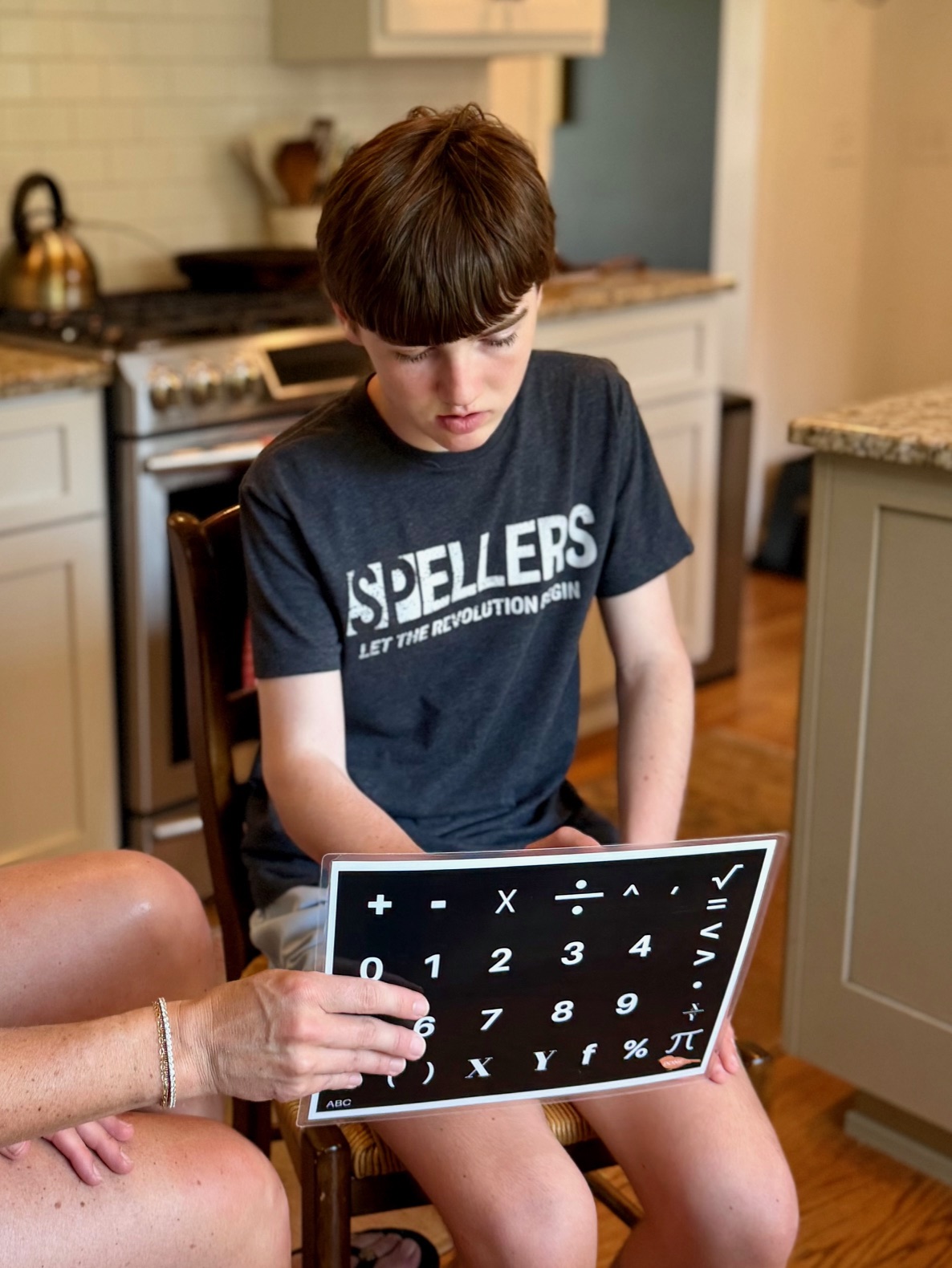
Unlike traditional communication methods, spelling on letter boards relies on gross motor skills of their arm, such as pointing to letters using a pencil or finger. This movement originates from the elbow, making it more accessible for individuals who struggle with fine motor control.
Through structured lessons, spellers practice pointing to letters on a hierarchy of letter boards, eventually working toward typing on a keyboard – a process that requires dedication, practice and patience, but yields life-changing results.
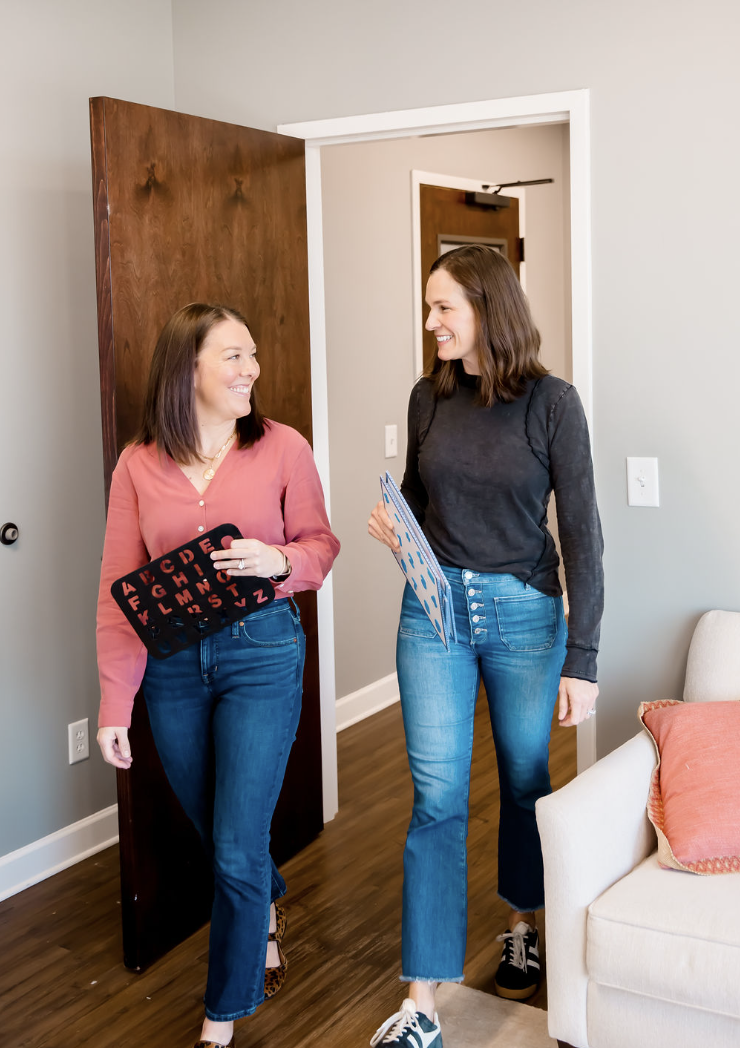
When your speller steps into my office, I always start with one foundational principle: presume competence. I treat every individual with respect and engage them in an age-appropriate manner. Together, we focus on building gross motor skills through consistent practice. While the journey requires hard work, the ultimate reward is extraordinary – the ability for your loved one to share their thoughts, feelings, and dreams with the world.
About Me
- Personalized, structured spelling sessions
- Hands-on training for parents & caregivers
- Encouragement and belief in every client’s potential
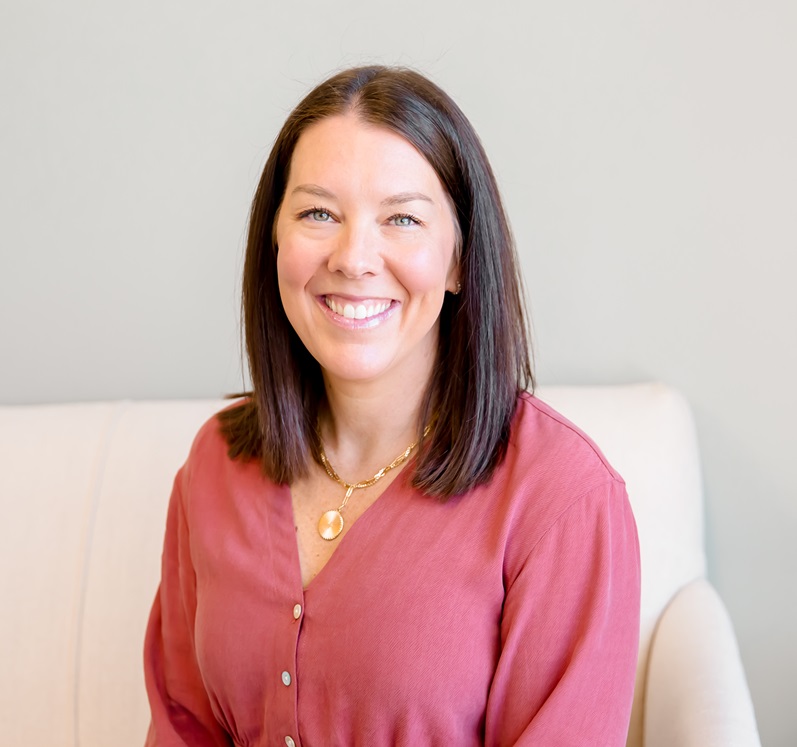
In addition to working as a practitioner, I also mentor families and their spellers to help provide encouragement, instruction, and guidance through their spelling journey.
WHAT IS APRAXIA?
Our senses are our bodies’ means of gaining information about the environment around us, and our relation to it. That information gives us a sense of ourselves – where our body is in space, how heavy we feel, how loud we talk, our sense of balance – and then informs how we should move our bodies to do the things we want to do in our environment. Because of this, for those with sensory differences, movement difficulties often also arise in the form of whole body apraxia.
Apraxia is a breakdown in our ability to move intentionally – even though what is being asked is understood & the individual has the intention to complete the task – resulting in challenges with intentional motor skills such as speech, other fine motor skills, activities of daily living, extracurricular activities, social participation, play, etc.
Apraxia is consistently inconsistent and causes the body is unable to complete a task “on demand.”
PRESUMING COMPETENCE
INVOLVES CHOOSING TO ADOPT A (SPECIFIC) BELIEF ABOUT SOMEONE.
It’s the belief that a person has the capacity to think, learn, and understand even in the absence of tangible evidence that such is the case. It means assuming they are capable of and want to learn and engage – they just need the right supports and coaching to help them succeed.
BELIEVE: Many of our children are working against a motor disorder (apraxia / dyspraxia/ etc.) that restricts them from showing their intellect or expressing their thoughts.
BELIEVE: Your speller has the ability to think, learn & understand, even if they cannot demonstrate it, (yet)!
IT STARTS WITH YOU: If your child has ever learned to do anything before – put on their shoes, click a seatbelt, pull up a chair to a table – they can learn to communicate through spelling. Shifting your mindset to that possibility is the first step in the most rewarding journey ahead.